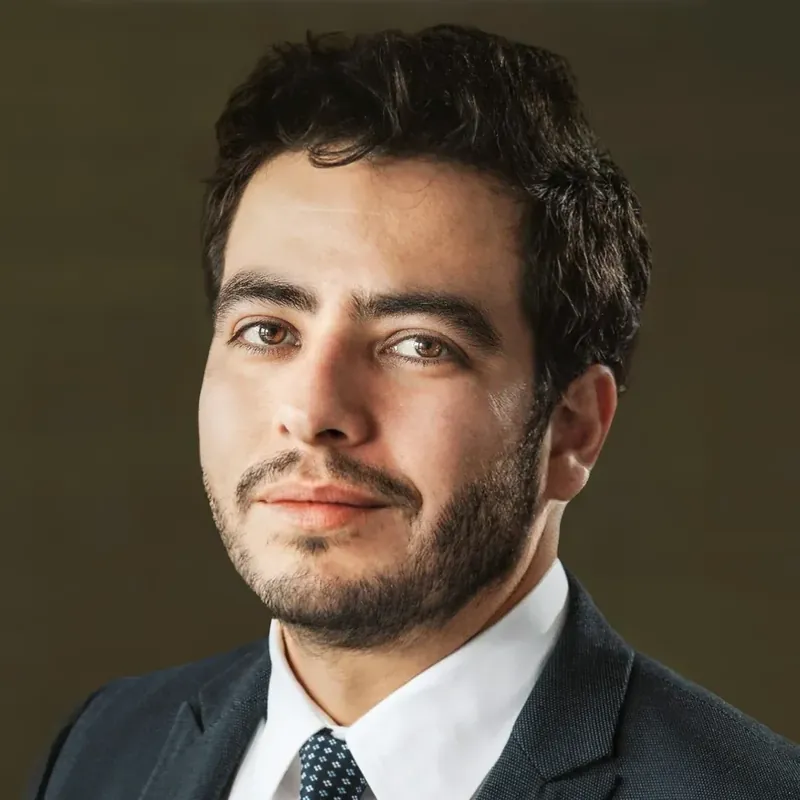
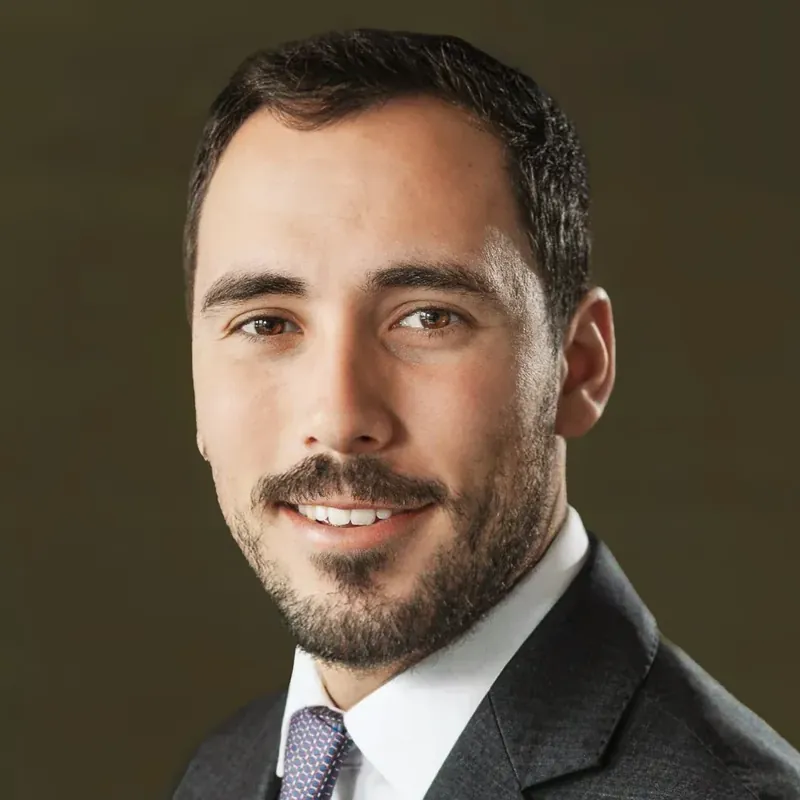
Managing Partner
Damien Hottelier
SBA Certified Family Law Specialist with tax expertise
Hans Wilsdorf Foundation Prize for taxation 2025 · LL.M. in tax law, with high distinction

Schedule a confidential consultation
SBA Certified Specialist
Damien Hottelier is a professional in family law and its tax implications.
If you're seeking a skilled and dedicated attorney for complex family law matters, Damien Hottelier is the right person for you.
As a partner at Kulik Hottelier, he is an SBA Family Law Specialist and holds an LL.M. in Tax, giving him solid expertise to handle even the most challenging cases.
His unique background, including training in forensic science, and his ongoing professional development reflect his commitment to excellence and legal innovation.
Damien Hottelier is renowned for his precise and attentive handling of complex divorces, international cases, and sensitive custody disputes.
A technology enthusiast, he has fully digitised his practice, published best practices for the profession, and released specialised applications for lawyers.
An accomplished professional
Damien Hottelier remains at the forefront of his field and never stops learning:
- 2023 — 2025. LL.M. in Tax Law at the University of Geneva. Graduated with distinction ("très bien") and awarded the Wilsdorf Foundation Prize for the best thesis in taxation.
- 2018. SBA Certified Family Law Specialist by the Swiss Bar Association.
- 2017 — 2018. CAS in Family Law. Ranked in the "highest third" among twenty participating attorneys.
- 2011. Bar admission granted by the Canton of Valais.
- 2007 — 2009. Bachelor of Laws from the University of Fribourg. Magna cum Laude distinction, three-year programme completed in three semesters.
- 2006 — 2008. Master of Laws from the Universities of Lausanne and Geneva, specialising in “Law, Crime and Security of New Technologies.”
- 2003 — 2006. Bachelor’s in Forensic Science from the University of Lausanne. Magna cum Laude distinction.
Recognised by peers
Damien Hottelier is widely recognised in his field:
- 2024 — Present. Admitted to the IAFL.
- 2024 — Present. Admitted to the FOJ (Federal Office of Justice) network for child abduction cases as an attorney.
- 2024. Speaker at the Conference Prenuptial Agreements Here and Elsewhere organized in Geneva by the Swiss Institute of Comparative Law.
- 2023 — Present. Member of the Francophone Commission of SBA Family Law Specialists of the Swiss Bar Association.
- 2020 — Present. Member of the Family Law Commission of the Valais Bar Association.
- 2020 — Present. Member of the Cantonal Commission on Parental Consensus.
- 2019 — 2023. Club Secretary of Kiwanis Bex-Salin.
- 2018. SBA Certified Family Law Specialist by the Swiss Bar Association.
- 2017 — 2018. CAS in Family Law. Ranked in the "highest third" among twenty participating attorneys.
- 2017 — Present. Member of VF / FA, Association of SBA Family Law Specialists.
- 2012 — Present. Member of the Swiss Bar Association and the Valais Bar Association.
Damien Hottelier’s General Terms and Conditions are available here: https://damien-hottelier.notion.site/cg.
Areas of Expertise
Why Damien
Divorce
With over a thousand divorce cases handled, Damien Hottelier brings extensive experience in both contentious and amicable proceedings. He excels at working independently while also leading teams on domestic and international matters, combining strategic oversight with meticulous attention to client wishes. His effectiveness has consistently earned high praise from clients, as evidenced by the reviews published here.
Planning
A specialist in family law and its tax implications, Damien Hottelier stands out as a go-to advisor for estate planning, whether it involves setting up or coordinating complex projects. His experience as a litigator in numerous inheritance disputes has given him a practical understanding of the strategies and arguments that prove decisive in court. He brings a tactical and pragmatic approach in service of testators' wishes.
Testimonials
What our clients say
We often think a lawyer is there to manage cases. But this firm does much more than that: it saves people. When I arrived at Kulik Hottelier, I was exhausted, overwhelmed, lost. I didn't know where to turn anymore, and I felt like everything was against me. Yet, from the very first meeting, something changed: I found hope again. Here, you're not just a name on a file. You are heard, understood, respected, and defended with impressive determination. The follow-up is constant, responses are quick, exchanges are clear and transparent. You always know where you're going, without surprises and with confidence. Kulik Hottelier is: • exceptional legal expertise • a thoughtful, intelligent, and effective strategy • clear and honest communication at every step • and above all, a rare humanity in this profession What struck me the most? Their ability to fight without ever getting drawn into unnecessary conflicts. A firm, brilliant, and incredibly precise defense, always results-oriented, never ego-driven. In moments when I doubted, they were my pillar. In moments when I was afraid, they were my assurance. And at the decisive moment, they were the force that made all the difference. Today, I am finally turning the page. And I know that without their work, their support, and their excellence, none of this would have been possible. If you're looking for a firm that combines brains, heart, courage, and transparency, don't waste time: contact them. There are professionals… and then there are lawyers who truly change a life. This firm belongs to the second category. Thank you to Maître Sevig, Maître Hottelier, and all your teams who work behind the scenes. Your work will remain engraved in my story.
My case was very complex, but Damien and his team managed, step by step, to reverse a situation that was initially very unfavorable to me. After winning before all courts, my child and I were finally able to return home. Damien and his collaborators are extremely competent. I highly recommend them! Thank you infinitely for your work, you gave us back our freedom!
I had to work with various law firms during a divorce, even in Switzerland, which is not my home country. The support, commitment, and results I received from Kulik Hottelier were exceptional. The firm stands out for its humanity and honesty, and always acted in the best interest of the children. My sincere thanks to the entire team.
I am more than satisfied and full of gratitude towards Me Hottelier, whose great professionalism got me out in one month of a situation I thought would never end, which was depressing me and preventing me from moving forward in life. His empathy and exceptional listening skills gave me hope again and brought me enormous relief. Very experienced, Me Hottelier is remarkably efficient while remaining human and patient. He truly listened to me and advised me, and at no point did I feel like just another case number, which is very much appreciated, especially during difficult times. My questions always received quick and detailed answers. Thank you also to his entire team, an excellent firm, highly competent yet welcoming and human. I am immensely grateful for the help provided.
Affiliations
Affiliations




Webinars
Online Conferences
Upcoming
Inheritance in Switzerland: A Guide for International Families
Wills, forced heirship, cross-border estates — a clear guide to protecting your family's legacy under Swiss inheritance law.
Protecting Your Wealth During a Swiss Divorce
Marital property, pensions, real estate — proven strategies to safeguard your assets and secure a fair outcome in Swiss divorce proceedings.
Past conferences
Expat Divorce: Cross-Border Complications to Anticipate
Divorce in Switzerland: What Expats Need to Know
Child Custody in Swiss Law: Your Rights Explained
Answers and advice · 54
Frequently asked questions
Protection
Is either being homosexual or engaging in consensual homosexual sexual acts illegal? If so, what are the penalties?
No. Homosexuality and consensual homosexual acts are legal under Swiss law.
Protection
Is any aspect of gender identity or gender affirming treatment illegal? If so what are the penalties?
No. However, there are specific requirements for minors. See question 37.
Protection
Are there further comments on gender identity and gender affirming treatment in Switzerland?
According to case law, gender-affirming treatments must be reimbursed by basic (and mandatory) health insurance (see Supreme Court 137 I 86). No legal text covers all areas, and concerned individuals might encounter resistance from insurers, requiring additional documentation to establish the necessary diagnosis of Gender Identity Disorder in Adolescents or Adults according to DSM 302.85. Existing psychiatric therapy of at least six months is usually required for insurance coverage of hormonal treatments. Insurers won't cover surgery without an existing psychiatric therapy for at least one year and will usually not accept claims without prior hormonal treatment. Surgery coverage is extensive and may include genital, mammary, facial (though this is disputed), and vocal cord modifications (see Supreme Court 9C_572/2015 § 4.2).
Protection
Can a same-sex couple marry? If so, are there any differences from opposite-sex marriages?
Yes. On September 26th, 2021, Swiss citizens widely accepted (64% in favor) the "Marriage for All" legislation, establishing gender-neutral marriage. There is no difference between same-sex and opposite-sex marriages.
Protection
Are foreign marriages of same-sex couples recognised?
Yes.
Protection
Is there a lesser, non-marriage status (e.g., civil union-type scheme) for same-sex couples? If so what are the significant differences (if any) from full marriage?
An older legislation provided such a non-married status ("Federal Act on the Registered Partnership between Same-Sex Couples"). It was materially abolished by the "Marriage for All" legislation and it is not possible to conclude such agreement.
Protection
Are de facto/cohabiting/live-in relationships for same-sex couples recognised? If so, are there any differences in the treatment of opposite-sex and same-sex de facto or cohabiting/live-in relationships on the breakdown of their relationship?
They are not legally recognized, and there is no legal difference between same-sex and opposite-sex de facto couples in terms of breakdown. However, Swiss law provides specific corrections allowing de facto couples to be considered in certain situations (notably medical representation and partial social insurance coverage in case of death). Concluding a de facto agreement is possible and legally binding but is complex and highly fact-specific due to form and proof requirements and tax consequences, which differ between cantons.
Protection
Is customary marriage recognised? If so, is it recognised between same-sex couples?
Not directly. However, a foreign customary marriage might be legally binding in specific circumstances. There is no difference between same-sex and opposite-sex couples in this regard.
Protection
Can more than two people be recognised as the parents of a child?
Not under Swiss law. According to Civil Code § 267, previous parent-child relationships are extinguished in the case of adoption. However, Switzerland supports the broad recognition of foreign adoptions, including those with more than two parents.
Protection
What is the status of a parent upon the child's birth – for example, is the person giving birth automatically named as the mother, or can the person be named as mother, father or parent at their choosing?
The person giving birth is automatically designated as the mother and cannot choose a different status (see Civil Code § 252 I).
Protection
Is adoption possible?
Yes.
Protection
Are there classes of people who are ineligible to adopt (unmarried individuals, unmarried couples, same-sex couples, transgender, non-binary or intersex people)?
Unmarried couples are ineligible to adopt together. Individuals aged 28 or older are eligible to adopt. Married couples are eligible to adopt after three years of cohabitation, provided both partners are aged 28 or older. A spouse or cohabitant is eligible to adopt the child of their partner if they have lived together for more than three years. Gender does not matter at this point. The consent of the other parent is mandatory and can only be waived if the parent is unknown, has been missing for some time, or permanently lacks the capacity for judgment. The consent can be revoked once.
Protection
Is surrogacy legal?
No. Intended parents will not both be recognized – the father or one of the fathers may be able to recognize the child – and it is a misdemeanor under Swiss law for anyone to provide assistance with surrogacy. Parents relying on surrogacy will likely face several legal challenges, including child protection measures. The other parent might adopt the child based on the adoption of the partner's child statutes (see Supreme Court 148 III 384). If the intended parents separate and only one is considered a legal parent, the other parent might request visitation rights (see Supreme Court 147 III 209).
Protection
Is commercial/compensated surrogacy legal?
No.
Protection
Is the parentage of same-sex couples who have become parents through surrogacy overseas recognised? If so, are further steps required?
Not based on Swiss law. Two mothers relying on surrogacy will not be able to recognize their parenthood. When two fathers rely on surrogacy, one may be able to recognize the child and become a legal parent. The other parent might adopt the child based on the adoption of the partner's child statutes (see Supreme Court 148 III 384). The Supreme Court considers the prohibition of surrogacy to be essential to the public interest (see Supreme Court 148 III 384). Two parents relocating to Switzerland will likely not face difficulties as long as their status is recognized by the originating state.
Protection
Is gamete and/or embryo donation legal and if so, what requirements must be met to terminate the parental relationship between the donor and the child? Is this different if the donation is made to a same-sex married couple or a same-sex unmarried individual?
No. See Federal Act on Medically Assisted Reproduction § 4.
Protection
Are same-sex couples who have a child through artificial insemination recognised as the parents?
Yes, as long as they are married mothers (since July 1, 2022) or opposite-sex couples and have complied with the provisions of the Federal Act on Medically Assisted Reproduction.
Protection
If a person gives birth to a child following treatment at an IVF clinic how is the parentage of the spouse recognised? Is it any different if they are in a same-sex relationship, civil union or common-law/de facto/cohabiting relationship?
With surrogacy and ovum/embryo donations prohibited, and sperm donations reserved for married couples, a child conceived via IVF will be legally recognized only for married women, married opposite-sex couples, or unmarried opposite-sex couples not relying on sperm donations. Parentage will be automatically recognized for married couples (Civil Code § 252 II). However, in the case of married women, the surgeon must provide a certificate stating that the requirements of the Federal Act on Medically Assisted Reproduction were strictly adhered to (Federal Civil Registar Ordinance § 35 VIbis). As long as Swiss law is strictly followed, the Federal Act on Medically Assisted Reproduction § 23 I stipulates that if a child is conceived through sperm donation in accordance with this Act, neither the child nor the mother's spouse can contest the filiation with the mother's spouse.
Protection
If same-sex marriage is permitted, are there differences in the divorce process for same-sex couples concerning either finances or custody? If so, how?
No.
Protection
If a de facto/cohabiting/live-in relationship or customary marriage between a same-sex couple breaks down, what financial and/or custody claims are available and how do they differ from those available to an opposite-sex couple?
Same-sex and opposite-sex couples receive equal treatment in this matter. Issues regarding child status (parental responsibility, custody, alimony, child protection, child asset protection) are assessed in a summary proceeding, and the basic rules do not differ between married and unmarried couples. The Supreme Court does not recognize any alimony rights in a de facto couple. However, child support includes a specific portion for the caregiving parent to cover their basic costs, which essentially depends on the age of the child. Since the law does not regulate de facto couples, any claim must be based on the agreement that the two individuals have concluded a simple contract. Case law presumes that a five-year cohabitation usually involves such a contract. However, even when this is proven, the scope of this contract is typically limited and difficult to predict.
Protection
Are same-sex couples treated differently for inheritance?
No.
Protection
Can same-sex couples inherit property via alternate arrangements such as wills, bequests, etc.?
Yes. Attention is specifically drawn to tax issues regarding inheritance or donations for unmarried couples. The situation varies significantly between cantons and might lead to very high inheritance taxes. Seeking tax advice is strongly advised before taking any action.
Protection
Does the law prohibit discrimination on the basis of gender (including transgender/intersex/non-binary) or sexual orientation? If so, how?
Yes. Discrimination and incitement to hatred against a person or a group of persons on the grounds of their sexual orientation is a misdemeanor since July 1st, 2020. The new scope of this article was widely supported in the voting by Swiss citizens (63.1% in favor). Since 1981, equality between men and women has been supported by the constitution. In 2000, the Constitution § 8 added a broad equality principle and the prohibition of discrimination based on gender and way of life, including protections for transgender, intersex, and non-binary people, as well as sexual orientation. The federal legislature retains the ability to adopt discriminatory laws if they serve the public interest, are proportionate, and do not conflict with the essence of the principle.
Protection
Is gay conversion therapy banned?
Not everywhere. Several cantons have prohibited gay conversion therapies (Vaud on October 29, 2024, and Neuchâtel in April 2023). Multiple motions have been accepted in cantons, such as Geneva, and are likely to be introduced into those cantons' laws. At the federal level, several parliamentary initiatives related to a federal prohibition are currently pending. One of these federal parliamentary initiatives was initiated by a canton.
Protection
Can an adult legally change their gender either as of right or with Court sanction? If the latter, please describe the legal process, if any, required to do so and whether spousal consent is required.
Yes. According to Civil Code § 30b, since January 1st, 2022, any person who is firmly convinced that they are not of the sex recorded in the civil register may declare to the civil registrar their wish to have the entry changed. They can choose between male and female. Currently, the parliament has refused a third option or the absence of any indication. The declaration may be made at any civil registrar or Swiss diplomatic entity (see Civil Registrar Ordinance § 14b) and incurs a fee of CHF 75 (see Civil Registrar Fees Ordinance). The person making the declaration may also have one or more new first names entered in the civil register. The declaration has no legal effect on family relationships. The consent of a legal representative is required if the person making the declaration is under the age of 16, is subject to a general deputyship, or if the adult protection authority has so ordered.
Protection
Are gender-affirming treatments available to legal minors (including puberty blockers and/or surgery) and if so please describe the required parental consent/legal process.
Yes. The matter is not codified in law and largely depends on case law and medical guidelines. Generally speaking, a 16-year-old minor is presumed capable of giving consent independently, and parents do not need to be notified. For minors younger than 16, parental consent is usually required, but physicians may determine that the minor has the capacity to make their own decision. Parents can challenge the medical decision in court as long as the patient is a minor. If only one parent opposes, the other may seek court approval. See question 7 for additional information on the broad insurance coverage.
Protection
Can someone be identified as non-binary or X on their identity documents, such as birth certificate/passport?
No. Currently, the parliament has refused a third option or the absence of any indication.
Protection
What happens to the status of the marriage/civil partnership when one party transitions?
Since January 1st, 2022, the declaration has no legal effect on family relationships (see Civil Code § 30b).
Protection
Is changing gender a ground for divorce?
Old case law and civil registrar guidelines supported gender change as a ground for divorce. In our opinion, the situation has completely changed after the introduction of the Marriage for All legislation on January 1st, 2022, and we do not believe that a gender change would now be grounds for immediate divorce. However, Switzerland offers a no-fault divorce option after two years of separation.
Planification
What about in an international context?
Switzerland is a member of the Hague Convention of 13 January 2000 on the International Protection of Adults, which allows for broad recognition of decisions taken in Switzerland or abroad, as well as international cooperation based on common tools.
Planification
Who can take action?
Any close relative. The term "close relative" is not strictly defined; it is often interpreted broadly by the authorities, at least concerning family, even extended family.
Divorce
Can I get divorced?
You can consider divorce in four cases: (1) both spouses agree to divorce; (2) you have been living separately for two years — consult us beforehand; (3) continuing the marriage has become unbearable — while this is often not readily accepted, consult us to determine if your situation falls under this provision; (4) you wish to avoid jurisdiction abroad (meaning your spouse filing for divorce in another country) — while this case is not explicitly provided for by law, we handle it with our experience. Consult us. If you do not meet any of these conditions, you can: (1) obtain a legal separation judgment; (2) prepare for divorce while preserving assets; (3) obtain precise information about what to expect in Switzerland and thus decide what you want to do. Swiss law broadly recognizes marriage; therefore, the place of marriage often matters little in determining Swiss jurisdiction. Consult us if you have any doubts.
Divorce
Who gets the home?
Without an agreement, the judge follows a three-step legal framework to decide who stays in the home: utility of the property, feasibility of relocation, and legal status of the property. This determines who stays, who leaves, and under what conditions and timeline. Primary custody of children strongly increases the likelihood of being granted the marital home. Working from home can also be a compelling factor. However, there are no automatic outcomes—each case is evaluated based on its specific circumstances.
Divorce
Can I separate?
Swiss law follows a no-fault divorce system. While the civil code allows judges to authorize separate living, spouses generally don't need authorization to separate. However, be cautious—if you or your spouse later file for divorce in another country, different laws may apply, potentially leading to complications. More frequently, leaving the marital home might not be relevant at all. We recommend consulting us first to avoid such issues.
Divorce
What are the rules regarding forced heirship?
The rules underwent a drastic change with the new inheritance law that came into force in January 2023. The forced heirship portion is now reduced to half of the statutory share for children and spouse. The parents' forced heirship has been eliminated. With this clarification, Swiss law does not automatically invalidate a will in case of violation of forced heirship rules. Proper legal advice can in practice give you good chances of significantly increasing your room for maneuver.
Succession
Are there time limits for taking action as an heir?
There are several stages and each has its own deadline (there are one-month, three-month, one-year, five-year deadlines, etc.), or sometimes no deadline at all. The main problem to manage in a complex inheritance situation is time. We invite you to consult us very quickly to first understand the deadlines, then define the strategy.
Succession
Can one freely circumvent forced heirship rules?
It's not that easy, but defending oneself requires being proactive. Generally, avoidance happens in two ways: through direct violation of succession rules (though in Swiss and German law, forced heirs are only entitled to a portion of net assets rather than guaranteed heir status), or through choosing a different country's law. In both cases, the situations are endless and require particularly thorough examination to determine the legality and enforceability of such rules.
Divorce
Can prenuptial agreements be made under Swiss law?
Yes, but its meaning differs from what is commonly understood in Anglo-Saxon countries. Swiss law recognizes two types of prenuptial agreements: The first type is statutory, allowing spouses to choose from three matrimonial property regimes established by Swiss law. The second type, based on case law, allows spouses to make binding pre-arrangements about divorce effects under specific conditions. The topic is quite technical. You can find the lecture given by Damien Hottelier on this subject here.
Divorce
Can I relocate with my child?
The answer depends on your specific situation. With joint parental authority, you generally need the other parent's agreement to relocate. If they refuse, a judge can authorize the relocation—particularly considering whether you are the primary caregiver. Without joint parental authority, the custodial parent typically has freedom to relocate. However, careful case-by-case evaluation is essential. The risks are significant because Switzerland, as a party to the Hague Convention, can readily engage international cooperation to return a child. This makes obtaining relocation authorization much more challenging in international cases.
Divorce
Can I have my child returned?
When examining child returns, Switzerland first reviews the laws of the departure country to determine if the relocation was legal. It then applies relevant international agreements like the Hague and European conventions. These agreements aim to restore the previous situation, though Switzerland broadly applies several exceptions. The process falls under a specific law—the LF-EEA—which designates the highest cantonal court as the first instance court, with appeals going directly to the Federal Supreme Court. Our firm regularly handles these cases, representing both parents and children at all stages of proceedings.
Divorce
Who has jurisdiction to modify a foreign judgment?
Generally, the courts of the child's habitual residence have jurisdiction to handle all child-related matters (custody, maintenance, etc.), with exceptions becoming rare, including for modifying a judgment issued abroad. Regarding other matters, Swiss jurisdiction will be established if the respondent spouse is domiciled in Switzerland. The law also provides for other cases, but their recognition abroad must then be carefully verified. Don't hesitate to consult us for an initial assessment.
Divorce
Can a divorce judgment be modified?
Divorce judgments address both past matters — such as the liquidation of matrimonial property — and future arrangements — such as child custody and maintenance payments. Future arrangements in a divorce judgment can be modified when significant and lasting changes occur. For instance, maintenance payments may be adjusted due to job loss or substantial changes in income. Similarly, if a child expresses a strong desire to change their custody arrangement, this aspect may be reconsidered. Since the law provides no rigid criteria for such modifications, this flexibility works both ways — something we skillfully use to our clients' advantage. Past matters are generally settled permanently after appeal deadlines expire. However, we can seek revision in specific cases — such as concealed information or criminal influence — but this must be done quickly, so consult us without delay.
Divorce
Can protective measures for marital union (separation judgment) be modified?
Yes, but courts are strict about modifying judgments based on settlements or agreements. Thorough evidence must be presented to show that the requested changes were truly unforeseeable.
Divorce
What do magistrates do once informed?
Generally, and if there is an immediate risk of asset disappearance, the protection authority can (and frequently does) freeze assets and restrict the civil rights of the person concerned, at least until an initial hearing. A representative curator can also be appointed, or even a general protection measure for the person.
Succession
What costs are involved in settling an estate?
The costs depend on the nature and complexity of the settlement. In an amicable partition, you can expect legal fees for drafting the agreement and notary fees if real estate is involved. If a judicial partition is required, court filing fees and potentially expert valuation costs will also apply. Our firm provides transparent fee estimates at the outset so you can make informed decisions about how to proceed.
Succession
Can an estate be settled without going to court in Switzerland?
Yes, and this is in fact the most common and recommended approach. When all heirs agree on how to divide the estate, they can sign a private partition agreement that settles everything without court involvement. A notary is only required when real estate transfers are part of the settlement. Court proceedings become necessary only when one or more heirs refuse to cooperate or when fundamental disagreements cannot be resolved through negotiation.
Succession
How are real estate and other assets valued during estate settlement?
In an amicable settlement, the heirs are free to agree on the value of each asset. When they cannot reach an agreement, or when court proceedings are involved, the fair market value applies. For real estate, this typically requires an independent appraisal. Bank accounts, securities, and business interests are valued according to established methods. Proper valuation is critical, as it directly affects the size of each heir's share.
Succession
What happens if one heir refuses to sign the partition agreement?
If an heir refuses to cooperate, the estate cannot remain in limbo indefinitely. Swiss law allows any co-heir to file an action for partition before the competent court. The judge will then determine how the assets should be divided, taking into account the legal shares, any testamentary provisions, and the specific circumstances of the case. The refusing heir will be bound by the court's decision.
Succession
How long does it take to settle an estate in Switzerland?
The timeline depends largely on whether all heirs cooperate. When everyone agrees, the estate can be divided in a matter of weeks through a private partition agreement. If disputes arise and court proceedings become necessary, the process may take anywhere from twelve months to several years, depending on the complexity of the assets involved and the level of disagreement among the parties.
Divorce
When is an assessment recommended?
We advise conducting one during significant life events—such as the birth of a child, before marriage, before relocation, or before purchasing a house. Our role isn't to make decisions for you but rather to highlight the advantages and disadvantages of various options while helping protect your interests.
Planification
Can I maintain some privacy regarding my family in Switzerland?
Yes, generally speaking. The Swiss state operates under strict professional secrecy rules and maintains clear separations between departments. For instance, tax authorities have limited ability to share information with civil courts. The civil registry keeps paternity acknowledgments completely confidential until after the parent's death. We can guide you in understanding how to maintain family privacy here.
Divorce
How is alimony/maintenance determined?
The Swiss maintenance contribution system has two main categories based on income levels: one for cases where income significantly exceeds the standard of living (where maintenance is based on that standard, known as the one-step system), and another for cases where income is lower (the two-step system). In the latter case, a detailed calculation system prioritizes expenses in this order: first the basic needs of the paying parent, then the children's needs, followed by the custodial parent's needs, then the non-custodial parent's needs. Any remaining money is distributed among the parties according to a distribution formula. This system offers considerable flexibility, starting with income calculation—judges can even attribute a hypothetical income different from actual earning.
Planification
Is it possible to write a will that only covers assets located in Switzerland?
Yes, under Swiss law. Compatibility with the country of residence is systematically verified through specialized local attorneys. It is even possible to choose a partial election of Swiss law for certain reasons provided for by Swiss law.
Planification
Is it possible to subject your will to foreign law even if you are domiciled in Switzerland?
In principle yes, if you have the nationality of the country concerned. The law changes on January 1st, 2025. It will become easier for foreigners to choose foreign law even if they have Swiss nationality. Thus, the new Art. 91 LDIP provides that a person can subject their succession by will or inheritance pact to the law of one of their national States. The testator must have had the nationality in question either at the time of making the disposition or at the time of death. However Swiss citizens cannot deviate from Swiss law provisions regarding the forced heirship portion.